




























About This Course
Thank you! 😊 I’ll use RM250 as the course price. Here is your complete salespage copy for the Sarawak Tree ID & Forest Ecology Masterclass on Digyprime.com:
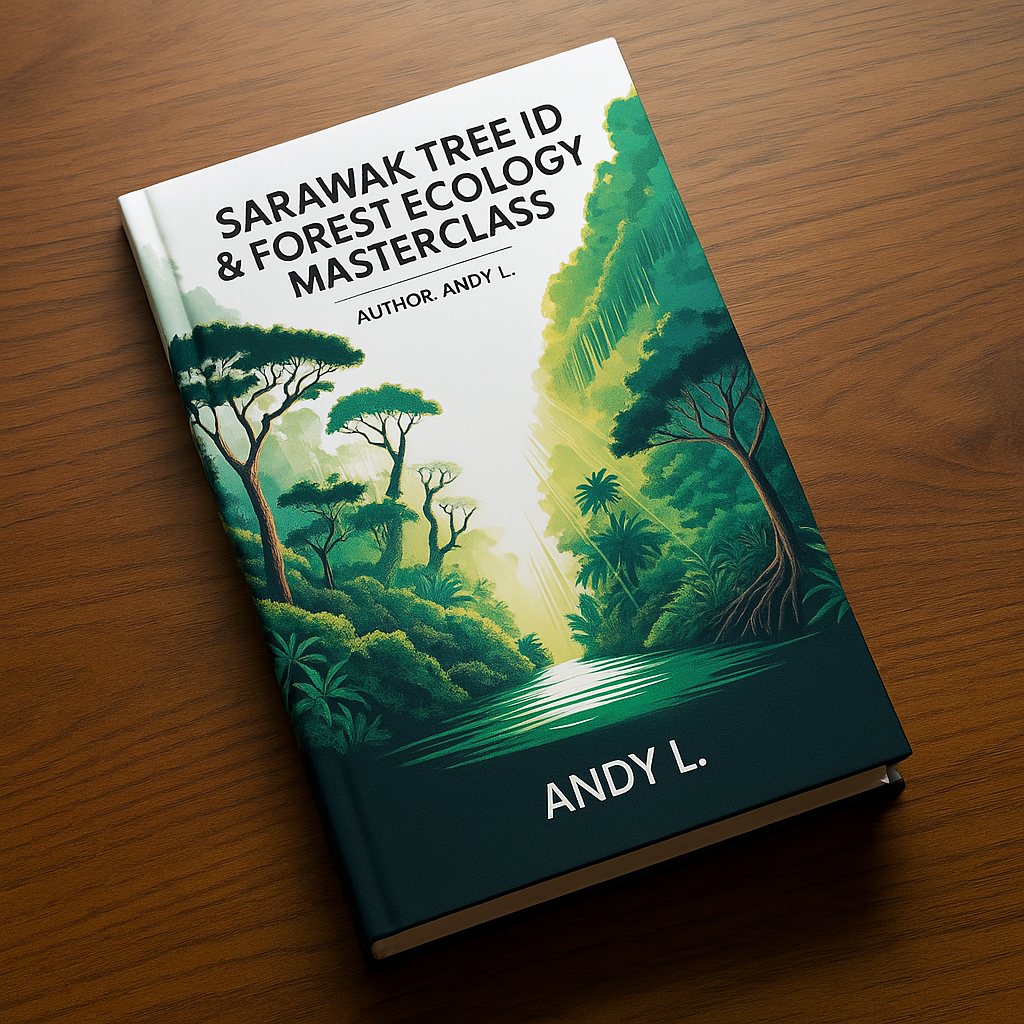
🌳 Sarawak Tree ID & Forest Ecology Masterclass 🌳
Unlock The Secrets of Sarawak’s Forests and Become a Tree Identification Expert!
HOOK:
Are you passionate about Sarawak’s lush forests, but struggle to confidently identify the trees you encounter? Do you wish you could recognise the ecological significance of every forest type and species in Sarawak? Missing out on these essential skills may be holding you back from maximising your impact as a student, nature guide, or forestry professional.
THE TRUTH:
Sarawak’s rainforests are home to some of the world’s most fascinating biodiversity, yet the ability to identify tree species and understand their ecological roles is rare—even among environmental graduates and experienced field guides. Most training programs don’t offer a systematic, Sarawak-focused approach, leaving learners overwhelmed by scattered resources, outdated field guides, and a lack of practical examples.
HERE’S YOUR SOLUTION:
Sarawak Tree ID & Forest Ecology Masterclass is designed for you—whether you’re a university student, nature guide, or forestry staff member—who wants to master tree identification and truly understand Sarawak’s forests.This step-by-step, field-tested digital course (in ebook & text module format) will equip you with:
The skills to distinguish Dipterocarp and non-Dipterocarp trees in every forest type
The ecological knowledge to explain why these trees matter for conservation, eco-tourism, and scientific research
Practical field techniques, quizzes, photo galleries, and much more
WHAT YOU’LL LEARN (Course Topics & Subtopics):
Introduction to Sarawak’s Forest Types
Overview of major forest types in Sarawak
Key ecological features of each forest type
Human impact and conservation efforts
Key Tree Species in Lowland Rainforests
Dipterocarp trees
Non-dipterocarp trees
Ecological role and identification tips
Tree Species of Montane Forests
Dipterocarp trees
Non-dipterocarp trees
Ecological role and identification tips
Mangrove and Peatswamp Tree Identification
Dipterocarp trees
Non-dipterocarp trees
Ecological role and identification tips
Methods for Identifying Trees (Leaves, Bark, Fruit)
Basic botany for tree identification
Field techniques and tools (including apps)
Creating your own identification guides
WHO SHOULD ENROLL:
University and college students in forestry or environmental science
Nature guides and eco-tourism operators seeking Sarawak-specific expertise
Government and private sector forestry staff
Conservation professionals and community group leaders
Anyone passionate about understanding Sarawak’s unique forest ecosystems
MEET YOUR INSTRUCTOR:
I am Andy L., a conservation officer with over 5 years of experience in the forestry field in Sarawak, specialising in tree identification and forest ecology. My passion is sharing real, field-tested knowledge to empower more people in conservation and education—helping you make a bigger impact in your work or studies.
WHAT OTHERS ARE SAYING:
“This masterclass gave me skills I couldn’t find in any Malaysian university! The focused approach and practical quizzes made tree identification so much easier.”– Linda J., Forestry Student
“A must-have for all nature guides in Sarawak. The sections on ecological roles and identification tricks are invaluable!”– Amir S., Eco-tourism Operator
PRICE & SPECIAL OFFER:
RM250 – One-time payment for lifetime access to all modules, quizzes, and updates!📚 Bonus: Early bird access to exclusive photo galleries and downloadable field guides (limited time)
FREQUENTLY ASKED QUESTIONS (FAQ):
Q: Do I need prior experience in forestry to benefit from this course? A: No! The course is designed to guide both beginners and experienced learners from the basics to advanced field knowledge.
Q: Will I get a certificate? A: Yes, you will receive a digital certificate of completion from Digyprime.com upon finishing the course.
Q: Can I download the modules for offline study? A: Absolutely! All ebook and text modules can be downloaded for your personal use.
Q: Is there a refund policy? A: Yes, you’re eligible for a full refund within 14 days if you’re not fully satisfied.
Q: Can this course help with professional accreditation? A: While not a direct certification, the course content aligns well with the practical needs of nature guides, forestry students, and field officers in Malaysia.
READY TO MASTER SARAWAK’S FORESTS?
Enrol now at Digyprime.com and transform your understanding of tree species and forest ecology forever! 😊

Andyson Luna
Curriculum Overview
This course includes 6 modules, 10 lessons, and 37:00 hours of materials.
Sarawak, the largest state in Malaysia, is renowned for its remarkable forest diversity and ecological richness. The state’s forests are among the most complex and biologically significant in the world, hosting an incredible range of flora and fauna. Understanding the major forest types in Sarawak is essential for anyone involved in forestry, conservation, eco-tourism, or academic research.
Each forest type in Sarawak is distinguished by its unique ecological characteristics, which result from a combination of climate, soil, topography, and hydrology. These features determine the structure, species composition, and ecological functions of the forests, contributing to Sarawak’s extraordinary biodiversity.
Sarawak’s forests have long been intertwined with the lives of its indigenous peoples and have supported economic growth through timber, agriculture, and eco-tourism. However, the increasing pressure from human activities over the past decades has resulted in profound changes to these vital ecosystems.
The lowland dipterocarp forests of Sarawak are world-renowned for their extraordinary richness and dominance of the Dipterocarpaceae family. Dipterocarp trees are the iconic giants of these forests, often forming the tallest emergent layer and shaping the rainforest’s structure and ecology. Genera such as Shorea, Dipterocarpus, Dryobalanops, Hopea, and Parashorea are particularly important, with each species exhibiting unique characteristics and ecological roles.
While dipterocarps dominate the canopy and emergent layers of Sarawak’s lowland rainforests, non-dipterocarp tree species form an essential component of these complex ecosystems. These species contribute significantly to the forest’s biodiversity, filling various niches within the understory, subcanopy, and even the upper canopy. The diversity of non-dipterocarp trees enhances ecological resilience and supports a wider array of wildlife and plant interactions.
Lowland rainforests in Sarawak are among the world’s most ecologically significant ecosystems, largely due to the distinct roles played by both dipterocarp and non-dipterocarp trees. Understanding these roles is crucial for anyone engaged in conservation, forestry management, or academic research.
In contrast to the lowland rainforests, montane forests in Sarawak, located typically above 800 meters elevation, feature a distinctly different assemblage of tree species and ecological conditions. Dipterocarp trees, while generally less dominant at these higher elevations, can still be present—particularly at the lower montane zones. Species such as Shorea curtisii and other hill dipterocarps may be found in transitional zones, but as altitude increases, the diversity and abundance of dipterocarps decline due to cooler temperatures, higher humidity, and persistent cloud cover.
Dipterocarp trees are generally less common in mangrove and peatswamp forests compared to lowland and hill rainforests, yet certain species have adapted to these unique wetland environments. In Sarawak’s peatswamp forests, dipterocarps such as Shorea platycarpa and Shorea teysmanniana can be found, albeit more sparsely distributed than in drier habitats. These species exhibit several adaptations that allow them to withstand acidic, waterlogged, and nutrient-poor conditions. For instance, their roots may be strongly buttressed or stilt-like to provide stability in soft, peaty soils, and their growth rates are typically slower due to the challenging environment.
A fundamental understanding of tree morphology is essential for accurate identification, especially in species-rich environments like Sarawak’s forests. Tree identification begins with systematic observation of key botanical features, namely leaves, bark, and fruits. Acquiring basic knowledge of botanical terminology and plant structures ensures consistency and accuracy when using field guides or communicating findings to others.
Quiz
Course Certificate
Course Specifications


Send Course as Gift

Additional Links
Login Register Contact Certificate Validation Become Instructor Privacy Policy Terms of ServicesPopular Categories
High Education AI Technologies Academics Marketing Business Islamic Education LifestyleContact US


Reply to Comment