

























+60194626840
support@digyprime.com
English flag
English
Select a Language
English flag
English
Malay flag
Malay
RM
MYR
Select a Currency
Malaysia Ringgit
RM
United States Dollar
$
Brunei Darussalam Dollar
$
0
Mechanics of Materials

Chapter 1: Introduction to Mechanics of Materials

This chapter sets the stage for everything you’ll learn about how materials behave under different forces. We start by looking at why Mechanics of Materials is so important—not just for engineers, but for anyone interested in designing safe, reliable, and efficient structures. You get to know the basic concepts and keywords like stress, strain, and deformation, which are the foundation for all the calculations and predictions you’ll do in this subject. We also take a quick journey through the history, showing how observations and early experiments, from the days of ancient builders to famous scientists like Galileo and Hooke, helped shape the field into what it is today. Finally, you’re introduced to the essential measurement units you’ll use, reminding you how staying consistent with units is super important in engineering. In short, this chapter gives you the big picture: Mechanics of Materials helps you make smart choices about materials, design safer structures, and understand the “language” engineers use to talk about how things bend, stretch, and sometimes break.
Study Duration
20 Min

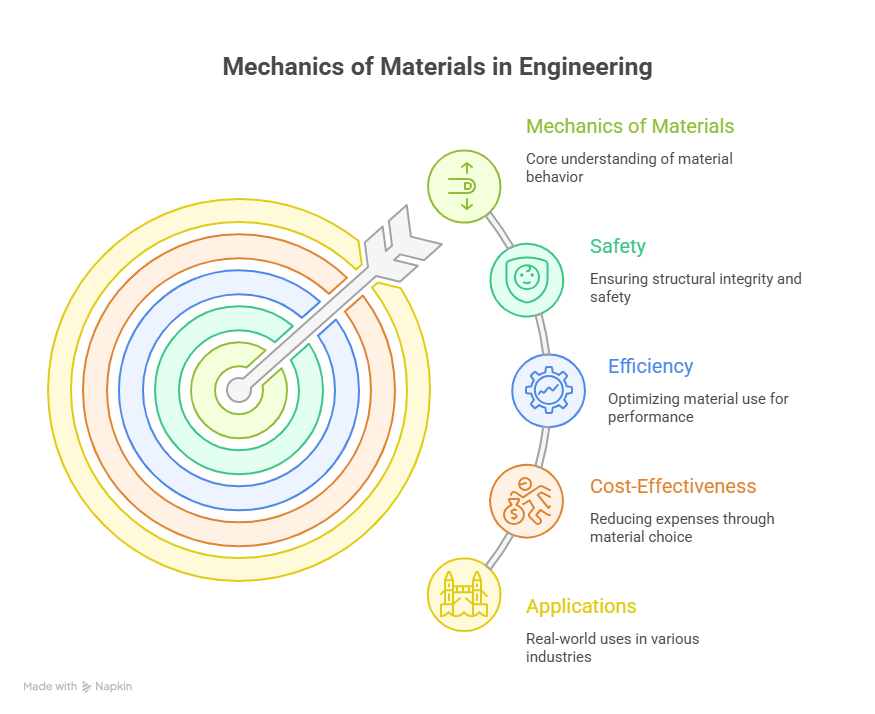
Mechanics of Materials is like the “backbone” of engineering. It's all about understanding how and why materials bend, break, or hold together when forces act on them. Imagine building a bridge, a tall building, or even something as simple as a chair. You need to know if your chosen materials can handle people's weight, wind, or even unexpected loads. That’s where this subject steps in! Whether designing skyscrapers, vehicles, or everyday household items, knowing the basics of Mechanics of Materials ensures safety, efficiency, and cost-effectiveness. In fact, every engineer, no matter their specialization, uses concepts from this subject in their daily work. The applications are endless—from constructing safe roads and buildings to designing aircraft and sports equipment!


Text Lesson 1/3
You are viewing
Chapter 1: Introduction to Mechanics of Materials